Skip

Last edited on November 29, 2025. View history

pūhā Pūhā

Sonchus kirkii
Also known as Puha (EN)

A variety of dandelion

How to sow pūhā: Direct seed outdoors, thin to 15cm

Sun requirement for pūhā: Plant in Full Sun

Dandelions are a large genus of flowering plants in the Asteraceae family native to Eurasia and North America. The two most common species, T. officinale and T. erythrospermum, propagate as wildflowers, but they can also be cultivated for their greens, flowers, and roots. Dandelions are perennial, herbaceous plants with long taproots, lobed leaves that grow in rosettes, and yellow flower heads composed of florets. The young leaves can be used raw in salads. They are high in vitamins and minerals. Older, larger leaves are more bitter and are best sautéed or added to soups and stews. The flower petals are used to make dandelion wine. The roots take a year to harvest, and can be brewed into a detoxifying, mildly diuretic tea or coffee substitute. Dandelions are considered a beneficial weed and have a number of uses as a companion plant. They combat fusarium wilt, a soil-borne fungal disease that afflicts tomatoes, because their roots produce an acid that "starves" the disease of one of its essential nutrients, iron. Their taproots loosen compacted soils and bring up nutrients for shallower-rooted plants. Dandelions attract pollinating insects and release ethylene gas, helping fruit to ripen. Deadhead flowers to prevent the plants from becoming invasive.


3
plantings
5
harvests
0
seed packets
Growstuff is a free, community-run site for people who grow food. Keep track of what you plant and harvest, find seeds to swap, and see what is growing near you. Join to record your own pūhā.

Pūhā facts

Lifespan

Annual living and reproducing in a single year or less
4 weeks median lifespan
First harvest expected 7 weeks after planting
Last harvest expected 4 weeks after planting

Grown for

leaf harvested 5 times
Optimal temperature 14–22 °C
Absolute temperature 5–26 °C
FAO EcoCrop
Optimal rainfall 500–1000 mm/year
Absolute rainfall 300–2700 mm/year
FAO EcoCrop
Optimal soil pH 5–6.5
Absolute soil pH 4.5–8.3
FAO EcoCrop

Crop cycle

90–180 days
FAO EcoCrop

Max altitude

2000 m
FAO EcoCrop

Optimal light

very bright to cloudy skies
FAO EcoCrop
What are growing degree days?

A plant grows with warmth, not with days. A growing degree day is one day's worth of useful warmth: how many degrees the day's average temperature is above the lowest temperature the crop grows at. Add them up from planting and you know how far along the crop is, whatever the calendar says.

Say that lowest temperature is 10°C. A day averaging 17°C gives 7 growing degree days. A day averaging 8°C gives none, as it is too cold for the crop to grow. That is why the same lettuce takes about 50 days in a summer and 90 in an autumn: it needs the same total warmth either way.

For pūhā, the FAO EcoCrop database gives a lowest growing temperature of 5°C and a shortest growing cycle of 90 days at its best temperature, about 1170 growing degree days to a first harvest.

Where you've told us where your garden is, we use this and the weather there to predict when your pūhā will be ready to harvest. We don't use it for how long a plant lives or when it finishes: we go by what members have logged for that.

How members grow pūhā

Sunniness

Loading...

Planted from

Loading...

Harvested for

Loading...

Varieties of pūhā

Image of prickly leaf pūhā

prickly leaf pūhā

Sonchus oleraceus
Image of Scottish flatleaf pūhā

Scottish flatleaf pūhā

Sonchus oleraceus

Plant pūhā with

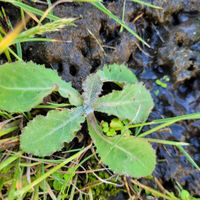
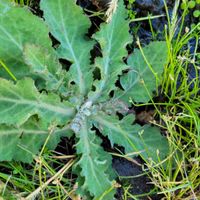
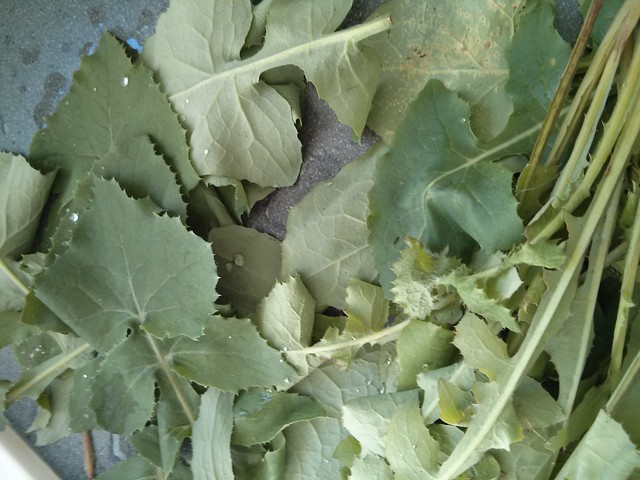
Photos

Pūhā crops

Pūhā plantings

2020-04-09_11-37-00
2020-04-09_11-37-00
by shiny
IMG_20180228_172532
IMG_20180228_172532
by shiny

Pūhā harvests

puha for dinner
puha for dinner
by shiny
Puha
Puha
by shiny

Video

Where pūhā grow

Only plantings by members who have set their locations are shown.

What people are saying about pūhā

how to eat kamo kamo

by shiny,

Chop up the kamo kamo.

Remove seeds. (Save these to grow for next year)

Leave skin on.

Roast with sprigs of rosemary at 180C for about 40 minutes (until soft) It's okay to do this the day before

Remove skins (easier if the kamo kamo is cool). place in pot with chicken …

kamokamo kamokamos rosemary rosemary garlic pūhā pūhā
Read more

Pūhā for dinner

by shiny,

Pūhā grows wild everywhere in New Zealand. It's a bit like spinach, but is bitter when raw. It's traditional in a bunch of dishes, but I like to use as a substitute for steamed spinach with eggs benedict.

pūhā pūhā
Read more
Image of pūhā

Who's planted pūhā

Sign in or sign up to track your pūhā plantings.

Pūhā harvests

View all pūhā harvests

Sign in or sign up to track your pūhā harvests.

Find pūhā seeds

There are no seeds available to trade on Growstuff right now.

Time to harvest

If sown now, expect a first harvest in about 90 to 180 days.

From the growing cycle in the FAO EcoCrop database, which is the same wherever it is grown.

Ecological requirements

Data from the FAO EcoCrop database for Taraxacum officinale Weber; Wigg.

Family / Taxonomy Magnoliopsida
Asteridae
Asterales
Compositae
Killing temperature growth: 0 °C, rest: -5 °C
Life form herb
Life span perennial
Habit erect, acaulescent (or rosette plants)
Optimal soil depth shallow (20-50 cm)
Optimal soil texture heavy, medium, light
Optimal soil fertility moderate
Optimal soil drainage well (dry spells)
Optimal soil salinity low (<4 dS/m)
Photoperiod long day (>14 hours)

Learn more about pūhā

Resources outside Growstuff.