Last edited on 29 Nov 2025. View history
Chayote
 Chayote
How to sow chayote: Direct seed whole fruit outdoors
Sun requirement for chayote: Plant in Full Sun
Chayote is a tender perennial in the Cucurbitaceae family grown for its edible gourds, roots, stems, and leaves. Unlike other cucurbits like squash, cucumbers, and melons, Chayote's small gourds have a single, large, flattened seed or pit. Some varieties have spiny fruits. Chayote is native to Mesoamerica and thrives in a subtropical to tropical climate, although it can be grown in other regions in containers. It needs 120-150 frost-free days to reach harvest. Like cucumbers, it has a sprawling growth pattern and benefits from trellising - fruit will rot if it sits on the soil. It's pale green fruit can be 10-20cm long and resembles a flattened, wrinkled pear. It's green to white flesh has a mild taste like a cross between a potato and a cucumber. It is usually lightly cooked like summer squash. The tubers are starchy and eaten like potatoes. The shoots and heart-shaped leaves can be added to salads and stir-fries.
- 6
- plantings
- 13
- harvests
- 0
- seed packets

Chayote facts
Lifespan
Height
1200cmRow Spacing
300cmGrown for
fruit harvested 9 timesWhat are growing degree days?
A plant grows with warmth, not with days. A growing degree day is one day's worth of useful warmth: how many degrees the day's average temperature is above the lowest temperature the crop grows at. Add them up from planting and you know how far along the crop is, whatever the calendar says.
Say that lowest temperature is 10°C. A day averaging 17°C gives 7 growing degree days. A day averaging 8°C gives none, as it is too cold for the crop to grow. That is why the same lettuce takes about 50 days in a summer and 90 in an autumn: it needs the same total warmth either way.
For chayote, the FAO EcoCrop database gives a lowest growing temperature of 12°C and a shortest growing cycle of 100 days at its best temperature, about 1250 growing degree days to a first harvest.
Where you've told us where your garden is, we use this and the weather there to predict when your chayote will be ready to harvest. We don't use it for how long a plant lives or when it finishes: we go by what members have logged for that.
How members grow chayotes
Sunniness
Planted from
Harvested for

Photos
 Photos
Chayote crops
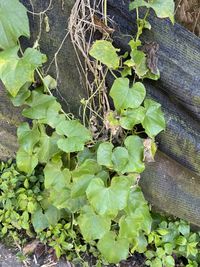
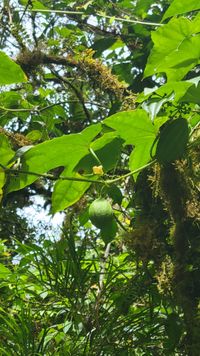
Video
Where chayotes grow
Only plantings by members who have set their locations are shown.
What people are saying about chayotes
Nobody has posted about chayotes yet.
Sign in or sign up to post your tips and experiences growing chayotes.
Who's planted chayotes
- Theomuur Garden · 1342 Durian Court...
- At_Home_In_My_Garden AHITG_ Bed B · Brisbane, Queensland
- FedericoMenaQuintero Back garden · Xalapa, Veracruz, Mexico
Chayote harvests
-
FedericoMenaQuintero harvested 5.
over 11 years ago
-
FedericoMenaQuintero harvested 9.
over 11 years ago
-
FedericoMenaQuintero harvested 11.
over 11 years ago
 FedericoMenaQuintero harvested 5.
Find chayote seeds
There are no seeds available to trade on Growstuff right now.
- Purchase seeds via Ebay
- Sign in or sign up to list your seeds to trade.
Ecological requirements
Data from the FAO EcoCrop database for Sechium edule
| Family / Taxonomy | Magnoliopsida Dilleniidae Violales Cucurbitaceae |
|---|---|
| Optimal temperature | 19 - 30 °C |
| Absolute temperature | 12 - 40 °C |
| Optimal rainfall | 800 - 2000 mm/year |
| Absolute rainfall | 600 - 2600 mm/year |
| Optimal soil pH | 5.5 - 7.0 |
| Absolute soil pH | 4.3 - 8.0 |
| Crop cycle | 100 - 180 days |
| Max altitude | 2000 m |
| Life form | vine |
| Life span | annual, perennial |
| Habit | climber/scrambler/scadent |
| Optimal soil depth | shallow (20-50 cm) |
| Optimal soil texture | medium, organic |
| Optimal soil fertility | high |
| Optimal soil drainage | well (dry spells) |
| Optimal soil salinity | low (<4 dS/m) |
| Photoperiod | short day (<12 hours), neutral day (12-14 hours) |
| Optimal light | very bright to light shade |
Learn more about chayotes
Resources outside Growstuff.
