Last edited on February 03, 2024. View history
 Brazilian Starfish
A variety of Capsicum baccatum
How to sow Brazilian starfish: Direct seed indoors, transplant seedlings outside after hardening off
Sun requirement for Brazilian starfish: Plant in Full Sun
Capiscum is a genus of flowering plants in the nightshade family Solanaceae that produces peppers. The Capiscum genus contains 20-27 species of peppers which vary in color, shape, size, and heat. 5 species are domesticated. Most peppers are green when unripe and change color as the fruit matures. The fruit of most species contains capsaicin, which gives hot peppers their spiciness. Bell peppers (Capsicum annuum) are an exception: they do not contain capsaicin due to a recessive gene, and are therefore not spicy. The Scoville scale is used to measure the relative heat of peppers. Bell peppers have a rating of 0-25 Scoville Heat Units (SHU), jalapenos are between 2,500-10,000 SHU. All peppers, regardless of species, prefer a long, warm growing season and well-drained soil high in organic matter. Seeds can be started indoors 8-10 weeks before hardening off and transplanting. In cooler climates, it can be preferable to grow peppers in containers indoors to extend the growing season and prevent frost from killing plants. Peppers have an upright growing habit and can benefit from staking to help the plant support the fruits.
- 1
- planting
- 0
- harvests
- 0
- seed packets

Brazilian starfish facts
Lifespan
Crop cycle
Max altitude
Optimal light
What are growing degree days?
A plant grows with warmth, not with days. A growing degree day is one day's worth of useful warmth: how many degrees the day's average temperature is above the lowest temperature the crop grows at. Add them up from planting and you know how far along the crop is, whatever the calendar says.
Say that lowest temperature is 10°C. A day averaging 17°C gives 7 growing degree days. A day averaging 8°C gives none, as it is too cold for the crop to grow. That is why the same lettuce takes about 50 days in a summer and 90 in an autumn: it needs the same total warmth either way.
For Brazilian starfish, the FAO EcoCrop database gives a lowest growing temperature of 8°C and a shortest growing cycle of 60 days at its best temperature, about 930 growing degree days to a first harvest.
Where you've told us where your garden is, we use this and the weather there to predict when your Brazilian starfish will be ready to harvest. We don't use it for how long a plant lives or when it finishes: we go by what members have logged for that.
How members grow Brazilian starfish
Sunniness
Planted from

Photos
 Photos
Brazilian starfish crops
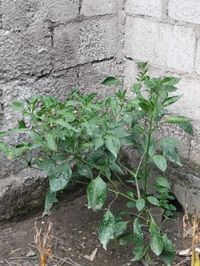
Video
Where Brazilian starfish grow
Only plantings by members who have set their locations are shown.
What people are saying about Brazilian starfish
Nobody has posted about Brazilian starfish yet.
Sign in or sign up to post your tips and experiences growing Brazilian starfish.
Who's planted Brazilian starfish
- corvi Lower Stone Hill Plot · salt spring island
 corvi
Brazilian starfish harvests
Nobody has harvested this crop yet.
Sign in or sign up to track your Brazilian starfish harvests.Find Brazilian starfish seeds
There are no seeds available to trade on Growstuff right now.
- Purchase seeds via Ebay
- Sign in or sign up to list your seeds to trade.
Time to harvest
If sown now, expect a first harvest in about 60 to 180 days.
From the growing cycle in the FAO EcoCrop database, which is the same wherever it is grown.
Ecological requirements
Data from the FAO EcoCrop database for Capsicum annuum L.
| Family / Taxonomy | Magnoliopsida Asteridae Solanales Solanaceae |
|---|---|
| Life form | herb |
| Life span | annual |
| Habit | erect |
| Optimal soil depth | medium (50-150 cm) |
| Optimal soil texture | medium, organic |
| Optimal soil fertility | moderate |
| Optimal soil drainage | well (dry spells) |
| Optimal soil salinity | low (<4 dS/m) |
| Photoperiod | short day (<12 hours), neutral day (12-14 hours) |
Learn more about Brazilian starfish
Resources outside Growstuff.
